
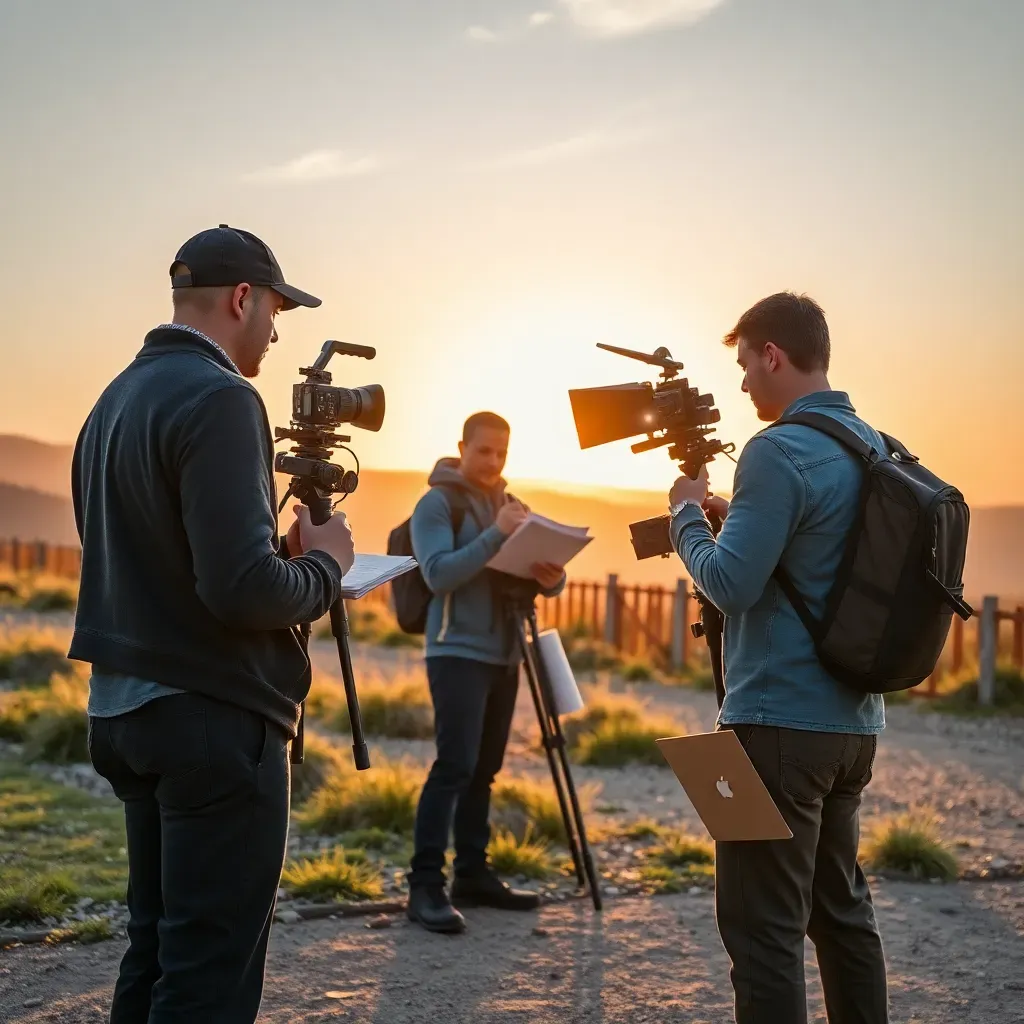
What Is a Film Fixer? The Complete Guide to Production Fixers
How film fixers operate in Germany — what the role involves, why international productions rely on local expertise, how fixers navigate German bureaucracy and regional funding, and what to look for when hiring one
Germany ranks among the most active filming destinations in Europe, yet global crews arriving in Berlin, Munich, or Hamburg fast find that the country operates by its own distinct set of rules. A film fixer is the local production pro who turns that complexity into a functioning shoot. In the German context, the role carries specific weight because the country combines tight administrative processes — permit applications routed through city Ordnungsämter, heritage clearances from Denkmalschutz offices, regional funding applications with detailed compliance needs — with one of Europe's most generous incentive landscapes. The German Federal Film Fund (DFFF) provides grants of up to 30%, capped at €5M for DFFF I and €25M for DFFF II. Person Länder add their own programs on top. Handling all of this without someone who knows the system from the inside is not just slow. It is a genuine risk to your budget and schedule. This guide explains what a film fixer does, how the role functions within Germany's specific production ecosystem, when your project genuinely needs one, and how to review candidates before committing.
As Fixers in Germany, we bring local expertise to international productions filming in Germany. Our team's deep knowledge of local regulations, crew networks, and production infrastructure ensures your project runs smoothly from pre-production through delivery.
ACT 01
What Is a Fixer?
The Local Expert Who Bridges Productions and German Realities
A film fixer is a local production pro who sets up, facilitates, and manages the logistical demands of global shoots in their country. In Germany, that definition carries extra layers. The fixer is not only sourcing crew and arranging transport — they are interfacing with a federal system where film rules, funding bodies, and permit authorities operate in new ways in each of the sixteen Bundesländer. A fixer working in Bavaria deals with FilmFernsehFonds Bayern and Munich's Kreisverwaltungsreferat. A fixer in Berlin sets up with Medienboard Berlin-Brandenburg and the city's district-level Ordnungsämter. The role demands someone who knows not just shoot logistics but the specific administrative build style of the region where you are filming.
- Fixers combine production knowledge with deep knowing of regional German rules and administrative processes
- They act as the production's local representative with government offices, vendors, property owners, and communities
- Most German production fixers are multilingual, bridging communication between global crews and local authorities who may conduct business primarily in German
- The role ranges from a person freelance coordinator to a full [shoot service firm](/services/) managing each local element of a shoot
How the Term Entered the Film Industry
The word 'fixer' migrated into film production from journalism, where foreign correspondents working in unfamiliar countries relied on local contacts to arrange access, translate conversations, and solve problems that outsiders could not handle alone. When global film production expanded through the 1990s and 2000s — driven partly by the growth of regional incentive programs like those Germany pioneered — production firms found they needed the same kind of embedded local knowledge, but applied at a much larger operational scale. A journalist's fixer might arrange a single government interview. A film fixer in Germany might at once manage permit applications across three cities, set up a forty-person local crew, and prepare records for a DFFF funding application — all while keeping the production on schedule.
Individual Fixer vs Production Service Company
These terms are related but not interchangeable. A person fixer is mostly a freelancer giving planning, translation, and problem-solving — a single skilled pro who knows the local terrain. A shoot service firm is a registered Gesellschaft (GmbH or equivalent) offering from start to finish local production support: crew hiring, gear rental, accounting, insurance, permits, tax incentive forms, and full production management. Germany's complex regulatory and funding environment means that many shoots — specific those accessing DFFF or regional incentives — need the infrastructure of a shoot service firm rather than a person operator. The compliance needs alone often exceed what a single freelancer can manage.
ACT 02
What Does a Fixer Do?
The Full Scope of Responsibilities in the German Market
A fixer's daily work in Germany touches each operational dimension of a production. The scope extends well beyond what most global producers expect, specific given the country's layered regulatory environment and the chances presented by its funding programs.
- [Filming permits](/services/pre-production/film-permit-acquisition/) — applications through city-level film offices, Ordnungsamt planning, Denkmalschutz clearances for covered buildings and monuments, police notifications for street closures
- [Crew sourcing](/services/film-crew/) — identifying, vetting, and hiring local crew across all departments, drawing on Germany's deep pool of in tech skilled pros
- Gear — arranging rental from set up German suppliers, setting up customs procedures for imported gear under ATA Carnet or short-term import provisions
- [Location scouting](/services/pre-production/location-scouting-services/) — finding locations that satisfy creative needs while being in use filmable, permit-viable, and logistically sound
- Government and body-level liaison — representing the production with city authorities, federal agencies, Filmförderungsanstalt (FFA), and regional film commissions
- Translation and cultural mediation — not only translating language but interpreting administrative needs, business customs, and the expectations German authorities have of pro shoots
- Transport and lodging — organizing car fleets, setting up with German transport rules, booking hotel blocks across shooting locations
- Budget management — building accurate local budgets in EUR, managing petty cash, processing invoices from German vendors, and making sure costs align with funding compliance needs
- Emergency problem-solving — responding to the unexpected with local knowledge, from weather disruptions and gear failures to sudden permit complications
Pre-Production: Where German Precision Begins
Germany rewards thorough preparation and penalizes improvisation. Before cameras roll, the fixer builds the operational foundation: researching locations that match the creative brief while confirming they can be permitted within the production's timeline, filing permit applications with the appropriate city offices, and handling any Denkmalschutz needs for shoots at covered buildings or historical sites. They source local crew matched to the production's tech and budgetary needs — Germany's crew base is highly skilled. But availability during peak production seasons in Berlin and Munich needs advance planning. If the production is accessing DFFF or regional incentives, the fixer sets up with producers and local accountants to make sure spending structures satisfy the cultural test and minimum-spend thresholds that funding bodies need.
Production: Managing the Shoot on German Ground
During filming, the fixer operates as the production's nerve center for everything local. They manage relationships with permit-issuing authorities, make sure the crew complies with conditions attached to location agreements, and handle the constant stream of logistical adjustments any shoot demands. In Germany, this often means setting up with police for traffic management during exterior shoots, liaising with Anwohner (local residents) affected by filming activity, and making sure compliance with German noise rules. Ruhezeiten are taken seriously and enforced. For documentary shoots, the fixer arranges interviews, navigates data protection considerations under German privacy law, and gives cultural context that shapes editorial decisions.
Administrative and Legal Compliance
Germany's administrative environment is thorough but predictable — which is an advantage once you know how it works. Global shoots face work permit needs for non-EU crew, customs declarations for imported gear, compliance with German employment law (Arbeitsrecht) when hiring local crew, insurance obligations, and financial reporting needs. Productions accessing tax incentives must keep detailed records of qualifying expenditure. The fixer sets up all of this with local accountants, legal advisors, and government offices, making sure the production stays compliant across each jurisdiction it operates in. German authorities are mostly cooperative with film shoots. But they expect forms to be complete and accurate before granting approvals.
ACT 03
When Do You Need a Fixer?
Five Scenarios Where Local Expertise Becomes Essential
Germany is not an above all difficult country to film in — its infrastructure is great, its crews are highly pro, and its authorities are mostly supportive of production activity. But it is a country that runs on process. Global crews who underestimate the administrative needs always lose time and money. Here are the situations where a local fixer transforms from helpful to key.
- The production team does not speak German — and many city offices, vendors, and crew conduct business primarily in German
- You are filming in a region where you have no set up contacts, crew relationships, or knowledge of local permit processes
- The shoot involves complex permit needs — public spaces, covered buildings, street closures, or locations in many German cities
- The production intends to access DFFF, Medienboard, FilmFernsehFonds Bayern, or other regional funding programs
- The timeline is compressed and the cost of delays would significantly exceed the cost of local production support
Language and Administrative Culture
English proficiency is widespread in Germany's creative industries, but government admin often operates in German. Permit applications, official correspondence, and regulatory needs are mostly issued in German, and city film offices — while increasingly accommodating of global shoots — respond faster and more favorably to professionally prepared applications submitted in the correct language through proper channels. Beyond language, German administrative culture has its own rhythm and expectations. Applications follow prescribed formats. Approval timelines are mostly reliable but non-negotiable. Authorities expect shoots to show organization and professionalism. A fixer who knows these expectations makes sure your production presents itself correctly from the first point of contact.
Regional Funding and Incentive Complexity
Germany's incentive landscape is unusually rich but genuinely complex. The federal DFFF provides grants of up to 30%, capped at €5M for DFFF I and €25M for DFFF II, while regional funds. Medienboard Berlin-Brandenburg, FilmFernsehFonds Bayern, Film- und Medienstiftung NRW, nordmedia, and others — give extra support that can push effective incentives above 30 percent. Each fund has its own application process, cultural test needs, minimum-spend thresholds, and compliance expectations. Productions that attempt to handle this without local expertise frequently make structuring errors that reduce their eligible rebates or, worse, disqualify them fully. A fixer with experience in German funding programs makes sure spending is structured correctly, records meets audit standards, and applications are submitted to the right funds at the right time.
Multi-City Shoots Across Bundesländer
A shoots in Berlin, Munich, and Cologne is operating across three different states with three different permit regimes, three different film commissions, and potentially three different regional funding bodies. Each city has its own film office, its own process for street closures and police planning, and its own expectations on community notification and noise management. Without a fixer who knows the differences between these jurisdictions, shoots frequently apply incorrect procedures, miss jurisdiction-specific needs, or fail to account for the lead times each city demands. A local fixer or shoot service firm with national reach handles these variations as a matter of routine.
ACT 04
Fixer vs Line Producer vs Production Coordinator
Clarifying the Boundaries Between Production Roles
Global shoots often ask how a fixer relates to a line producer or production coordinator. The roles share surface similarities — all involve logistics and planning — but they serve fundamentally different purposes within a production's structure.
- A fixer gives local expertise, on-the-ground logistics, and problem-solving specific to Germany or a specific German region
- A line producer manages the overall shoot budgets, shooting schedule, and operational decision-making
- A production coordinator handles administrative workflows — call sheets, travel arrangements, crew communications, and forms
- On global shoots in Germany, all three roles may operate at once with complementary responsibilities
Why the Roles Are Distinct
The distinction becomes clear when you consider territorial knowledge. A line producer based in London or Los Angeles brings deep production management expertise but cannot walk into a Berlin Ordnungsamt and negotiate a permit adjustment, source a replacement gaffer from Hamburg's crew network at short notice, or explain to a Bavarian Denkmalschutz officer why your shoot at a covered castle meets heritage protection needs. The fixer fills that gap with local knowledge that cannot be replicated remotely. On smaller shoots in Germany, the fixer may effectively function as the local line producer — managing budget, crew, and logistics under the guidance of the overseas production firm. On larger shoots, the fixer works alongside a dedicated line producer, handling local execution while the line producer manages the wider production from an operational and financial perspective.
Matching the Right Structure to Your Production
A small documentary crew filming interviews across Berlin for a week may need only a fixer — someone who arranges locations, sets up interviewees, manages local transport, and handles any permit needs while the director and producer manage the project remotely. A commercial work shooting a multi-day campaign in Munich mostly needs a fixer plus either a line producer or production coordinator to manage the overall schedule and client communications. A feature film or high-end television series shooting across many German locations needs the full complement: a line producer overseeing the global budget, a production coordinator managing administrative workflows, and a local fixer or shoot service firm handling everything on German soil. The fixer's role scales with the production, but the need for local expertise stays constant.
ACT 05
What Does a Fixer Cost?
Understanding Pricing for Film Fixer Services
Fixer pricing in Germany reflects the country's position as Europe's largest economy — pro services are priced to match. But the value delivered is proportional. Costs depend on the scope of services, length, production scale, and complexity of the logistics involved. While we do not publish fixed rates — they differ too much by project to be meaningful — here is how pricing mostly works.
- Person fixers mostly charge day rates that reflect Germany's pro service market and the fixer's experience level
- Shoot service firms give project-based fees covering the full scope of local planning, crew management, and administrative compliance
- Full-service fees mostly represent a proportion of total local production spend
- The cost of operating without a fixer in Germany — permit delays, funding application errors, miscommunication with German authorities — often exceeds the fixer's entire fee
Day Rate vs Project Fee
A person fixer on a day rate works well for smaller engagements — a documentary crew of three to five people shooting for several days, or a journalist needing local planning for a specific story. For shoots of any major scale, specific those involving German funding applications or multi-site logistics, a shoot service firm gives better value by bundling planning, crew hiring, gear sourcing, permit management, and administrative compliance into a single relationship. The project fee replaces many person hires you would otherwise need to make separately. Gives accountability across the full production lifecycle.
Factors That Influence Cost
Several variables shape what you will pay: the length of buy-in across pre-production, production, and wrap phases. The number and complexity of locations. Crew scale. Gear needs. Whether the production needs funding application support. And any specialized planning such as aerial filming, water work, or filming at off-limits sites. Germany's strong crew base and well-set up gear rental market mean that local costs are mostly predictable — a skilled fixer builds budgets that hold up during production. The most productive way is to share a full project brief and receive an itemized quote where each cost is transparent and open to discussion.
Why the Investment Pays for Itself
A single lost shooting day in Germany — caused by a rejected permit, a location that falls through, or a crew miscommunication — can cost more than the fixer's entire buy-in. Beyond avoiding problems, skilled fixers save money in ways that are not always obvious: they know which gear houses give competitive rates for global shoots. This locations are permit-friendly alternatives to oversubscribed spots, and how to structure local spending to boost incentive eligibility. For shoots accessing DFFF or regional funds, a fixer who makes sure correct spend allocation can recover tens of thousands of euros that would otherwise be left on the table. The fixer is not an added costs — they are a structural part of an efficiently run global shoots.
ACT 06
How to Choose a Fixer
Six Criteria for Evaluating Your German Production Partner
The quality of fixers differs significantly. The right choice affects each dimension of your shoot in Germany. Here are the criteria that matter most when reviewing candidates.
- Shown experience with shoots of comparable scale and format to yours — feature, documentary, commercial, or branded content
- A registered German business (GmbH or equivalent) with production insurance, clear contracts, and transparent accounting practices
- Set up relationships with German film offices, permit authorities, crew networks, and gear suppliers
- Strong communication skills in both German and English, with responsiveness that shows reliability during pre-production
- Verifiable references from recent shoots that you can contact directly
- Understanding of German funding programs and the administrative needs associated with incentive compliance
Evaluating Experience and Track Record
Request a production list and examine it for relevance. A fixer with extensive documentary experience in Berlin may not be the strongest choice for a large-scale commercial shoot in Bavaria, and vice versa. Look for shoots similar to yours in format, scale, and geographic scope. Contact references directly and ask specific questions: how did the fixer handle unexpected problems? Were budgets accurate? Was communication timely and clear? Did the fixer proactively identify risks or simply react to issues? A fixer who has set up hundreds of shoots in Germany brings body-level knowledge of the country's production ecosystem that newer entrants simply cannot match.
Assessing Professional Infrastructure
Germany's regulatory environment demands professionalism, and your fixer should reflect that. They should operate as a registered German business, carry appropriate production insurance (Betriebshaftpflicht at minimum), and give clear contractual terms that satisfy both German and global legal standards. Budgets should be itemized and denominated in EUR, not vague estimates. The fixer should show familiarity with German employment law if they are hiring crew on your behalf. With customs procedures if your production is importing gear. Be cautious of operators who cannot give proof of sign-ups, insurance, or references — the stakes in Germany's regulated environment are too high to work with unverified partners.
Testing the Relationship Before You Commit
The inquiry and quoting phase reveals how the working relationship will function under production pressure. A strong fixer asks detailed questions about your project before quoting — they want to know the creative drive, the logistical constraints, and the budget realities before proposing a plan. They give suggestions based on their local knowledge: better locations you had not considered, realistic timelines for permit approvals, crew availability windows you should plan around. They flag risks honestly rather than promising everything is straightforward. The best fixers in Germany combine thoroughness with pragmatism — they are precise about what needs to happen and direct about what it will take. That kind of candor during pre-production is what prevents costly surprises during the shoot.
ACT 07
Real-World Examples of Fixers in Action
How Production Fixers Solve Problems on German Shoots
Abstract descriptions of the fixer role only go so far. Here are three anonymized scenarios from German shoots that illustrate the tangible difference a local fixer makes.
- Permit rescue: securing alternative approval after a Berlin district office reversed a location decision days before the shoot
- Funding navigation: structuring a production's German spend to qualify for both DFFF and regional incentives at once
- Crew mobilization: assembling a specialized local crew for an unplanned shoot extension in a city outside the original production plan
The Berlin Permit Reversal
A global commercial work had received preliminary approval to shoot at a prominent Berlin location. Five days before the crew arrived, the district Ordnungsamt reversed the decision due to a scheduling conflict with a local civic event that had been confirmed after the filming application was submitted. The production firm, based abroad, had no local contacts and no knowing of the appeals process. Our fixer contacted the Ordnungsamt directly, presented a revised shooting schedule that avoided the conflict window, and at once scouted and applied for permits at two alternative locations in case the original approval could not be reinstated. The deal-making succeeded — the original location was confirmed under adjusted hours — and the backup locations given extra coverage the production had not planned but ultimately used. Without local intervention, the crew would have arrived to find their primary location unavailable.
Structuring Spend for Maximum Incentive Return
A mid-budget feature film planned to shoot primarily in North Rhine-Westphalia with extra days in Berlin. The production firm was aware of the DFFF but had not explored regional funding. Our fixer identified that Film- und Medienstiftung NRW gave supplementary support for qualifying shoots spending in the region. That the Berlin days could potentially qualify under a separate Medienboard application. Working with the production's accountants, the fixer restructured the shooting schedule and vendor contracts to make sure spending in each region met the minimum thresholds needed by each fund. The result was a combined effective incentive significantly higher than the DFFF alone would have delivered. The restructuring needed no extra production cost — only the expertise to know the programs existed and the precision to structure spending correctly.
Last-Minute Crew Assembly in Hamburg
A television production shooting a factual series had planned a six-day schedule in Munich. Midway through production, an editorial chance arose that needed two extra shooting days in Hamburg — a city where the production had no crew contacts, no gear arrangements, and no local infrastructure. Our fixer activated their Hamburg network and within 36 hours had confirmed a camera operator, sound recordist, local production assistant, and driver — all pros who had worked together before and understood the fast-paced needs of factual television. Gear was arranged through a Hamburg rental house with compatible stock. A mobile production office was set up at the crew's hotel. The Hamburg shoot integrated seamlessly with the Munich material because the fixer selected crew whose working style and tech standards matched the existing team.
ACT 08
Common Questions
What is a fixer in the film industry?
A fixer in the film industry is a local production professional who coordinates and manages the logistical requirements of international productions shooting in their country or region. In Germany, this includes handling filming permits through city-level Ordnungsämter, sourcing local crew, arranging equipment rental, scouting locations, providing translation between international teams and German authorities, and managing compliance with the country's regulatory and funding requirements. The term originated in journalism and was adopted by the film industry as international production grew. Today, fixers in Germany range from individual freelance coordinators to registered production service companies (GmbH) offering comprehensive local support.
What does a film fixer do?
A film fixer in Germany manages the complete range of local logistics for international productions. This includes researching and securing filming permits from municipal authorities and Denkmalschutz offices, sourcing and hiring local crew from Germany's skilled professional base, arranging equipment rental, scouting and securing locations across the country, liaising with local government authorities and regional film commissions, with FFA as Germany’s national film funding institution, providing German-English translation, organizing transport and accommodation, managing local budgets in EUR, and coordinating with accountants on DFFF and regional funding compliance. Their involvement spans pre-production through post-shoot wrap.
How much does a fixer cost?
Fixer costs in Germany vary based on the production's scale, duration, scope of services, and whether funding application support is required. Individual freelance fixers charge day rates that reflect Germany's professional service market, while production service companies quote project-based fees covering full local coordination. The investment typically represents a proportion of local production spend. Most productions find the cost pays for itself through prevented delays, avoided permit issues, and — particularly in Germany — correct incentive structuring that maximizes DFFF and regional fund returns. The cost of operating without local expertise almost always exceeds the fixer's fee.
What's the difference between a fixer and a line producer?
A fixer provides local expertise, logistics, and problem-solving specific to Germany or a particular German region. A line producer manages the overall production budget, shooting schedule, and operational execution — often from the production company's home base. The critical difference is territorial knowledge: a line producer based abroad cannot navigate a Berlin Ordnungsamt, negotiate with German equipment suppliers in their own language, or coordinate Denkmalschutz clearances at protected locations. On large international productions filming in Germany, both roles work in parallel — the line producer manages the global picture while the fixer handles local execution across German jurisdictions.
Do I need a fixer for a small shoot?
It depends on the location, language capability, and local knowledge your team already has. A small English-speaking crew filming in a Berlin studio with an existing contact may manage independently. But even small shoots benefit from a fixer when filming on location in Germany — permits are required in most public spaces, German authorities conduct official business primarily in German, and the country's regional funding programs can offset production costs even for smaller projects. The cost of a fixer for a small production in Germany is modest relative to the cost of a single prevented problem: a permit rejection, a miscommunication with a location owner, or a missed funding opportunity.
How do I find a fixer in Germany?
The most reliable approach is to engage an established production service company with a registered German business presence (GmbH), verifiable production track record, and appropriate insurance coverage. Regional film commissions and funding institutions — including the FFA as Germany’s national film funding institution, Medienboard Berlin-Brandenburg, FilmFernsehFonds Bayern, and Film- und Medienstiftung NRW — maintain industry contacts and can provide recommendations. You can also request referrals from production companies that have recently filmed in Germany. When evaluating candidates, request an itemized quote, verify references from productions of comparable scale, and confirm the fixer operates as a registered business with production insurance. Our team provides comprehensive fixer and production services across all German regions.
Ready to Roll
Need a Fixer for Your German Production?
Whether you are planning a documentary in Berlin, a commercial campaign in Munich, a feature film across multiple German regions, or a branded content shoot in Hamburg, our team provides comprehensive fixer and production services throughout Germany. We handle permits, crew, equipment, locations, funding coordination, and every other logistical detail so you can focus on the creative work. Contact Fixers in Germany to discuss your next project.